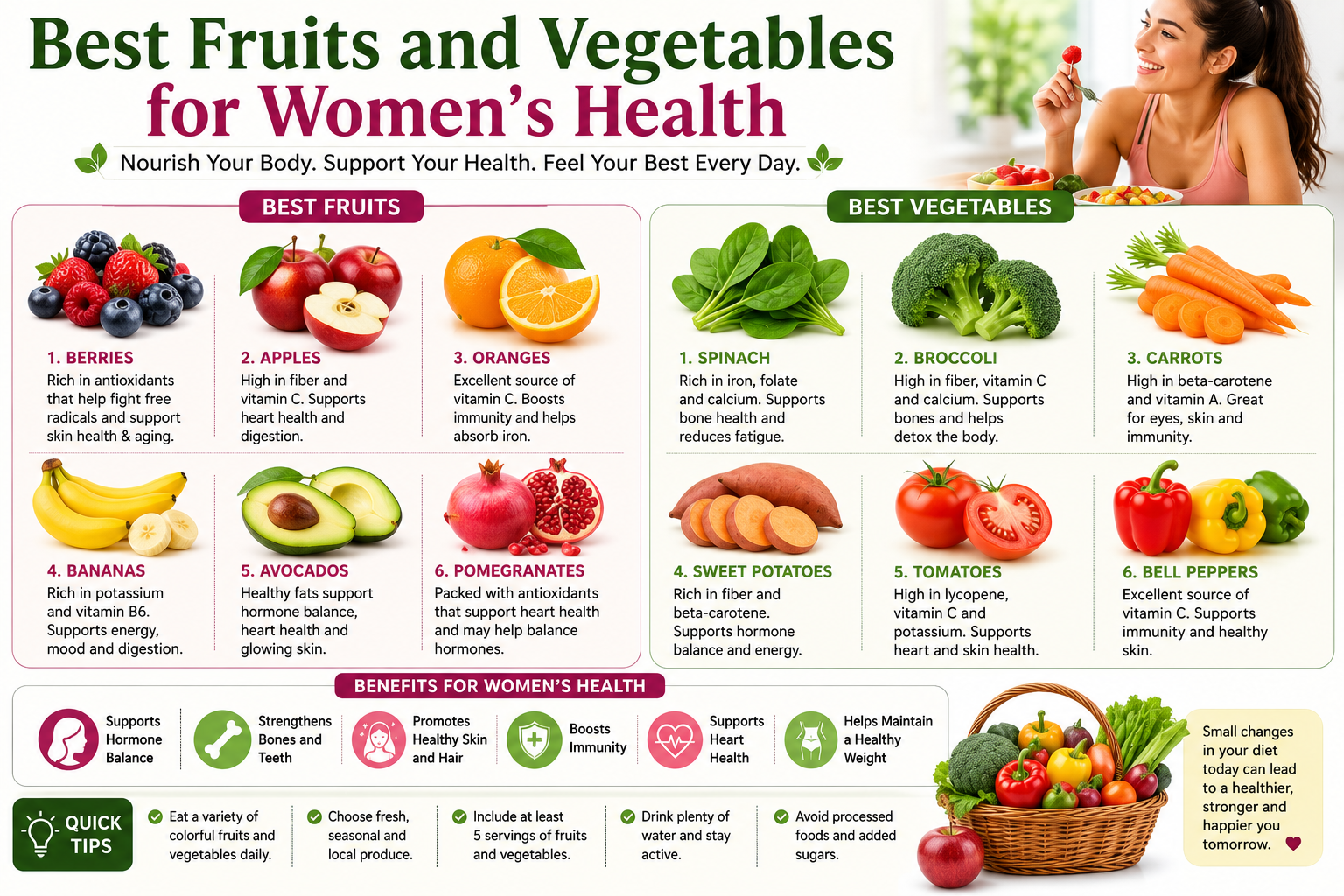
Eating a variety of fruits and vegetables is one of the simplest ways to support a healthy lifestyle. They are naturally rich in vitamins, minerals, fiber, and antioxidants that help your body function properly and contribute to overall well-being.
Including colorful fruits and vegetables in your daily meals can help support heart health, digestion, healthy skin, and steady energy levels.
Why Fruits and Vegetables Are Important
Fruits and vegetables provide essential nutrients that help support:
- Heart health
- Bone health
- Healthy digestion
- Skin health
- Immune function
- Overall wellness
Best Fruits for Women’s Health
1. Blueberries
Blueberries are packed with antioxidants and vitamin C.
Benefits
- Supports healthy aging
- Rich in antioxidants
- Provides fiber
2. Apples
Apples are a great source of fiber and vitamin C.
Benefits
- Supports digestion
- Helps you stay full
- Easy healthy snack
3. Oranges
Oranges are well known for their vitamin C content.
Benefits
- Supports normal immune function
- Refreshing and hydrating
- Rich in antioxidants
4. Bananas
Bananas provide potassium and vitamin B6.
Benefits
- Supports muscle function
- Provides natural energy
- Convenient snack
5. Avocados
Avocados contain healthy fats, fiber, and potassium.
Benefits
- Supports heart health
- Helps keep you satisfied
- Adds healthy fats to meals
6. Pomegranates
Pomegranates are rich in antioxidants and vitamin C.
Benefits
- Supports heart health
- Provides fiber
- Naturally refreshing
Best Vegetables for Women’s Health
1. Spinach
Spinach is rich in iron, folate, and vitamin K.
Benefits
- Supports bone health
- Adds important nutrients to meals
- Rich in antioxidants
2. Broccoli
Broccoli provides fiber, vitamin C, and vitamin K.
Benefits
- Supports healthy digestion
- Contributes to bone health
- Easy to include in meals
3. Carrots
Carrots are an excellent source of beta-carotene.
Benefits
- Supports eye health
- Provides vitamin A
- Crunchy and nutritious
4. Sweet Potatoes
Sweet potatoes contain fiber, vitamin A, and potassium.
Benefits
- Supports overall health
- Provides lasting energy
- Rich in antioxidants
5. Tomatoes
Tomatoes are a good source of vitamin C and lycopene.
Benefits
- Supports heart health
- Adds flavor to meals
- Low in calories
6. Bell Peppers
Bell peppers are rich in vitamin C and antioxidants.
Benefits
- Supports healthy skin
- Adds color to meals
- Rich in nutrients
Easy Ways to Eat More Fruits and Vegetables
- Add berries or bananas to your breakfast.
- Include a side salad with lunch.
- Snack on apples, oranges, or carrots.
- Add spinach to smoothies or omelets.
- Fill half your plate with vegetables at dinner.
- Keep fresh fruit visible for easy snacking.
Healthy Eating Tips
- Choose seasonal fruits and vegetables.
- Eat a variety of different colors.
- Wash produce before eating.
- Prefer fresh or frozen options with no added sugar or salt.
- Drink enough water throughout the day.
Benefits of Eating More Fruits and Vegetables
A diet rich in fruits and vegetables may help:
- Support heart health
- Promote healthy digestion
- Maintain healthy skin
- Support normal immune function
- Help maintain a healthy weight
- Improve overall nutrition
Final Thoughts
Adding more fruits and vegetables to your daily meals is one of the easiest ways to improve your diet. By choosing a colorful variety of produce, you can enjoy delicious meals while giving your body the nutrients it needs to support long-term health and well-being.
Small daily choices—such as adding fruit to breakfast or vegetables to dinner—can make a meaningful difference over time.
Frequently Asked Questions
How many servings of fruits and vegetables should I eat daily?
Many dietary guidelines recommend aiming for at least five servings of fruits and vegetables per day as part of a balanced diet.
Are frozen vegetables healthy?
Yes. Plain frozen vegetables retain many of their nutrients and can be a convenient option.
Which fruit contains the most vitamin C?
Oranges, strawberries, kiwi, and guava are all excellent sources of vitamin C.
Leave a Reply