

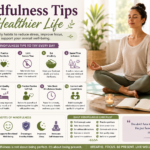






Mindfulness Tips for a Healthier Life
Modern life can be busy and stressful, making it easy to feel overwhelmed. Practicing mindfulness is a simple way to become more aware of the present moment and improve your overall well-being. Mindfulness doesn’t require special equipment or hours of practice—it can be part of your everyday routine.
By making small, intentional changes, you can support your mental and physical health while creating a calmer and more balanced lifestyle.
What Is Mindfulness?
Mindfulness is the practice of paying attention to the present moment without judgment. It encourages you to focus on your thoughts, feelings, and surroundings instead of worrying about the past or future.
Regular mindfulness practice may help:
- Reduce everyday stress
- Improve focus and concentration
- Support emotional well-being
- Encourage healthy habits
- Improve sleep quality
- Increase self-awareness
1. Start Your Day with Deep Breathing
Spend a few minutes each morning taking slow, deep breaths.
Try This:
- Inhale slowly through your nose.
- Hold your breath for a few seconds.
- Exhale gently through your mouth.
- Repeat for 5–10 breaths.
2. Practice Gratitude
Take a few moments each day to think about the good things in your life.
You can write down:
- Three things you’re grateful for
- A happy memory
- A personal achievement
- Something you’re looking forward to
3. Limit Screen Time
Too much screen time can contribute to stress and mental fatigue.
Healthy habits include:
- Taking regular breaks
- Avoiding screens before bedtime
- Spending more time outdoors
- Reading a book instead of scrolling
4. Eat Mindfully
Instead of rushing through meals:
- Eat slowly.
- Chew your food well.
- Notice flavors and textures.
- Avoid distractions while eating.
Mindful eating can help you enjoy meals and recognize when you’re full.
5. Spend Time in Nature
Nature provides a peaceful environment to relax your mind.
Ideas include:
- Walking in a park
- Gardening
- Sitting under a tree
- Watching the sunrise or sunset
Even a short walk outdoors can be refreshing.
6. Stay Physically Active
Regular movement supports both physical and mental wellness.
Choose activities you enjoy:
- Walking
- Yoga
- Cycling
- Dancing
- Stretching
Aim for regular activity throughout the week.
7. Get Quality Sleep
Good sleep supports focus, mood, and overall health.
Healthy sleep habits include:
- Sleeping 7–9 hours each night
- Following a consistent bedtime
- Keeping your bedroom cool and quiet
- Limiting caffeine late in the day
8. Practice Positive Self-Talk
Be kind to yourself.
Replace negative thoughts with encouraging ones, such as:
- “I’m doing my best.”
- “I can learn from mistakes.”
- “Small progress matters.”
9. Take Short Mindfulness Breaks
Pause during your day to reset.
For one minute:
- Close your eyes.
- Focus on your breathing.
- Relax your shoulders.
- Notice how your body feels.
These short breaks can help reduce stress.
10. Connect with Loved Ones
Spending time with family and friends supports emotional well-being.
Try to:
- Share meals together
- Have meaningful conversations
- Call someone you care about
- Spend quality time without distractions
Daily Mindfulness Checklist
✔ Drink enough water
✔ Take deep breaths
✔ Eat without distractions
✔ Exercise or stretch
✔ Spend time outdoors
✔ Practice gratitude
✔ Limit screen time
✔ Sleep 7–9 hours
Benefits of Mindfulness
Practicing mindfulness regularly may help:
- Improve focus
- Support emotional balance
- Reduce stress
- Encourage healthy habits
- Improve sleep quality
- Increase overall well-being
Final Thoughts
Mindfulness is a simple yet powerful habit that can improve your quality of life. By slowing down, focusing on the present moment, and making healthier daily choices, you can create a more balanced and positive lifestyle.
Start with one or two mindfulness habits today, and gradually build a routine that works for you. Small, consistent actions often lead to meaningful long-term results.
Frequently Asked Questions
What is mindfulness?
Mindfulness is the practice of paying attention to the present moment with awareness and without judgment.
How long should I practice mindfulness?
Even 5–10 minutes a day can be a good starting point. Consistency is more important than duration.
Can mindfulness reduce stress?
Many people find mindfulness helpful for managing everyday stress and improving emotional well-being, though it is not a replacement for professional mental health care when needed.